
Claire McRoberts is in-house counsel for Ivy Tech Community College and a board member of IPAAW, an animal advocacy nonprofit. A lifelong Hoosier, she lives in Indianapolis with her husband and four dogs.
On September 5th, the MDLF fellows shuffled into the Signature School in charming downtown Evansville, its doors proudly emblazoned with decals proclaiming it as the “#2 high school in the U.S.” We filed past the cafeteria, up the stairs, past overstuffed backpacks heaped in piles in the hallway and cheery bulletin boards showcasing student work. We found our classroom for the day, where posters on the wall reminded us of the difference between adverbs, adjectives, conjunctions, and prepositions. We squeezed into our chairs, set our notebooks on our laminate-top school desks, got out our sharpened pencils, and waited for class to begin.
Dr. Jenner, Indiana’s first Secretary of Education and our state’s top education official, has the pep and personality of your favorite high school teacher, so she was the perfect speaker to kick off our class on the State of Education in Indiana, our first in the fellowship’s education module. Dr. Jenner enthusiastically described for us the transformation of K-12 education in Indiana that she has been leading. She was particularly proud of the progress that has been made in student literacy rates in Indiana. Prior to the pandemic, literacy rates had been in a perpetual decline. Since 2021, literacy rates have now increased for four consecutive years, with Indiana ranking sixth in the nation among all states in fourth and eighth grade reading.
Maureen Weber, CEO of Early Learning Indiana, then joined us to share compelling arguments that while we often measure educational success and attainment at the K-12 level and beyond, many of the skills necessary for these successes are learned during the early childhood phase, defined as birth to age three. It is during this phase that a child’s brain is shaped and wired by the interactions the child has with caregivers both within and outside of the home. And there are significant consequences from the disparities in the quality of care children can access at this age; according to ELI, children of low-income families are exposed to 30 million fewer words by age three than their more financially advantaged peers.
Despite the demonstrated importance and demand for high-quality early childhood care and education, Mauren noted that there is still an enormous deficit of providers, creating high costs in Indiana and beyond. While all of my children have four legs (well, one has three), I have heard every friend with human offspring lament the eyewatering costs of daycare. I have friends who drive hours round trip each day to the only daycare that had an opening, friends who put their names on a daycare waitlist before even becoming pregnant, and friends who had to leave the workforce because it just didn’t make financial sense to work outside the home. Ironically, despite the enormous demand for caregivers, most of the professionals in the early childhood education field still don’t earn enough to make it a highly appealing career.
Fortunately, organizations like Early Learning Indiana are working hard to address these issues. Ivy Tech Community College is already the state’s largest provider of post-secondary education and training to early childhood professionals and has committed to more than doubling the output of trained professionals in this field in the state by 2027. The Lilly Foundation recently awarded Ivy Tech a $21.9 million grant to fund programs and partnerships in support of this goal, including a partnership with Early Learning Indiana that kicked off this summer.
Now in my tenth year working in higher education in Indiana, I needed no convincing that higher education has the power to change lives. Along with my four fellow Class VIII fellows who work in higher education, I have the privilege of regularly getting to see and hear about the difference a post-secondary certificate or a degree can make. Our firsthand knowledge of the subject didn’t make us any less excited to hear from Chris Lowery, the Commissioner for the Indiana Commission on Higher Education, who shared with us impactful data that quantified some of the lifelong impacts of attaining a college degree. Of note, in 2022, the average net worth for someone without a high school diploma was $175,627, compared to $1,992,935 for someone with a bachelor’s degree, and in 2000-2019, on average, the life expectancy for a bachelor’s degree holder was a full ten years longer than a person who never completed high school.
One theme that emerged across all speakers was the need for education to remain nimble and adaptive so that it can meet Hoosier students where they are and prepare students for the rapidly changing needs of our state’s employers. We discussed several examples of these adaptations, including:
A growing emphasis on apprenticeships and hands-on training experiences designed with specific employers in mind;
Redesign of high school diplomas to include enrollment, education, and enlistment readiness seals;
Rethinking curriculum requirements to allow students to test out of required subjects they have mastery of and focus their limited school time on other skills; and
The emergence and spread of non-traditional schools, including charter schools and “microschools” in unconventional spaces.
Like any “major moves” idea, the state (and future) of education in Indiana and the myriad of ways it is evolving sparked interesting conversation and reminded us, once again, that we all see the world through different lenses. Our September 5th class was a timely reminder that ultimately, education isn’t about teaching students what to think, it’s about teaching them how to think, and how to challenge and press one another’s ideas in a civil and respectful way, which has never seemed more important than it does in this era. As panelist and Class VI fellow Andrew Neal opined about education in the Hoosier state, “Everything else rests on the fate of this and the impact of getting this right.”
And with that, class was dismissed.
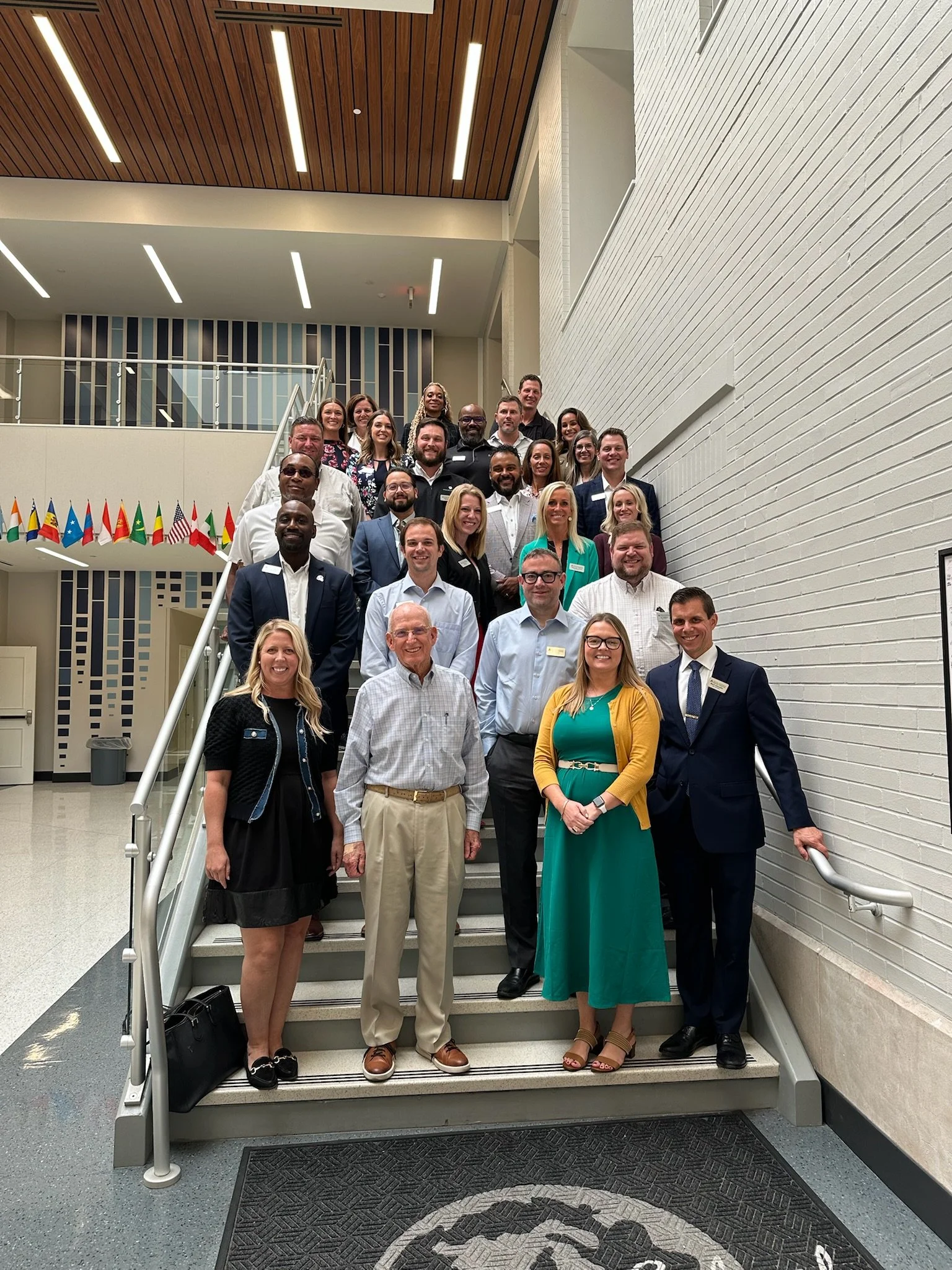
MDLF Class VIII Fellows at Signature School in Evansville, IN.